Source True RMS Digital Clamp Meter for HVAC, Electrical, and Industrial Use
Find 30 verified True RMS Digital Clamp Meter options from global suppliers. Compare specifications like accuracy, voltage range, and certifications including RoHS and CE to select the right tool for electrical maintenance and industrial testing.
Key considerations
Products List


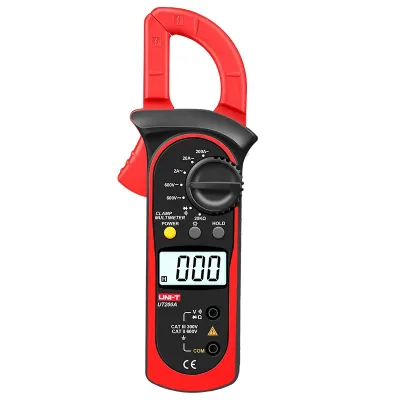


Original 374 True RMS AC/DC Clamp Meter Multimeter Digital Clamp Meter
$500.00 - $999.00
MOQ: 1 Pieces

Comprehensive Sourcing Guide
Strategic Sourcing Guide for True RMS Digital Clamp Meters
Understanding Core Technical Specifications and Performance Metrics
When sourcing true RMS digital clamp meters, buyers must prioritize the distinction between average-responding and true root-mean-square (RMS) measurement capabilities. True RMS technology is essential for accurately measuring non-sinusoidal waveforms commonly found in modern industrial environments with variable frequency drives, LED lighting, and switched-mode power supplies. The supplied product data indicates that the theoretical basis for these devices is electronic metering, which relies on advanced signal processing to calculate the effective value of AC and DC currents.
A critical observation from the available market data is the variance in accuracy specifications. Some units in the current supply pool advertise an accuracy of 1.0% ± 5 digits, while others specify a range of 0.5% to 1%. For high-precision procurement, the 0.5% tier is generally preferred for critical diagnostic work, whereas 1.0% may suffice for general maintenance. The resolution of these devices is equally important; observed data points to a count capacity of 40,000 counts, which provides the granularity necessary to detect small fluctuations in electrical parameters.
Voltage and current ranges define the operational envelope of the clamp meter. The observed product attributes list an AC/DC voltage range of 600V, which is a standard threshold for general industrial applications. However, the current range varies significantly, with specific models supporting up to 400A, while others in the same category list an inrush current capability of 1500A. This discrepancy highlights the need for buyers to verify the specific peak current requirements of their application before selecting a model. Additionally, resistance ranges are observed at 400.0 Ω, 4000 Ω, and 40.00 kΩ, suggesting that these instruments often function as multi-purpose testers rather than single-function clamps.
The display technology is another pivotal specification. While some entries note a "Digital" display, others specify an "LCD" interface. The choice between these often correlates with the power source and environmental conditions. Devices powered by AC and DC sources may offer different display backlights or refresh rates compared to battery-operated units. The power supply for many of these units is noted as a 9V battery, which implies a reliance on replaceable power sources rather than rechargeable internal packs, a factor that influences long-term operational costs.
Compliance, Certification, and Safety Standards Verification
In the electrical testing sector, compliance is not merely a formality but a fundamental requirement for liability and safety. The supplied product facts explicitly mention several certifications, including RoHS, ISO, and CE. These are high-confidence indicators that the manufacturing process adheres to specific environmental and quality management protocols. RoHS compliance ensures the absence of hazardous substances, which is critical for export to markets with strict environmental regulations. ISO certification suggests a standardized approach to quality control within the manufacturing facility, though the specific ISO standard (e.g., ISO 9001) should be verified with the supplier.
Safety standards are equally paramount. The data references IEC 61010-2-032, specifically noting Cat.III and 300V Degree2 ratings. This standard defines the safety requirements for electrical equipment for measurement, control, and laboratory use. A Cat.III rating is essential for measurements taken at the distribution level, such as at the main panel or sub-panel, where higher transient voltages are expected. Buyers must confirm that the specific model they intend to purchase carries this exact rating, as Cat.II devices are intended for downstream loads and may not provide sufficient protection for upstream measurements.
The presence of CE marking indicates conformity with health, safety, and environmental protection standards for products sold within the European Economic Area. However, the data also lists a standard of 6423337mm, which appears to be a dimensional specification rather than a safety standard, yet it is categorized under "standard" in the source text. This ambiguity underscores the need for buyers to distinguish between physical dimensions and regulatory compliance documents. Furthermore, the duty cycle is observed to range from 10% to 95%, which is a performance characteristic rather than a safety certification but impacts the device's ability to handle continuous operation without overheating.
When evaluating suppliers, buyers should request valid certification documents that match the specific model number. The data shows multiple model numbers, such as Fluke 325, FLIR CM74, Hioki CM4373-50, and various 266 series models. It is crucial to ensure that the certification applies to the exact model being procured, as different models within a brand's lineup may have different safety ratings. The observed origin locations include China (Mainland) and the USA, which can influence the supply chain's exposure to different regulatory regimes. Buyers must verify that the origin country's export compliance aligns with the destination country's import requirements.
Cost Drivers and Pricing Structure Analysis
The pricing landscape for true RMS digital clamp meters is diverse, with observed listed prices ranging from $0.98 to $999. This wide spectrum indicates a market segmented by brand reputation, build quality, and feature sets. The lower end of the price range likely corresponds to generic or entry-level models that may lack advanced features like auto-ranging or high inrush current capabilities. Conversely, the upper end of the range typically includes premium brands known for durability, higher accuracy, and extensive warranty support.
Several factors drive the cost of these instruments. First, the brand plays a significant role; models associated with established names like Fluke or Hioki often command a premium due to their proven track record in harsh environments. Second, the complexity of the internal electronics affects the price. Devices with true RMS technology, 40,000-count displays, and wide temperature operating ranges (e.g., -10°C to 400°C) require more sophisticated components and calibration processes, increasing the manufacturing cost.
The Minimum Order Quantity (MOQ) is another critical cost driver. The observed MOQ range spans from 1 to 200 units. For small-scale procurement or single-unit replacement needs, an MOQ of 1 is ideal, though the unit price may be higher. For bulk procurement, an MOQ of 200 can significantly reduce the per-unit cost, making it a viable strategy for large organizations or distributors. Buyers must balance the upfront capital expenditure against the long-term savings achieved through bulk purchasing.
Packaging and logistics also contribute to the final cost. The data indicates various packing methods, including UPS/DHL/FedEx services and standard export packaging for air and sea freight. The choice of packaging affects the shipping cost and the risk of damage during transit. Additionally, the weight of the unit, observed at 290g for some models, influences shipping rates, particularly for air freight where weight is a primary cost factor. Buyers should factor in these logistics costs when calculating the total cost of ownership, especially for international procurement.
Typical Applications and Operational Environments
True RMS digital clamp meters are versatile tools designed for a wide array of applications across various industries. The primary use case is electrical maintenance and troubleshooting in industrial, commercial, and residential settings. The ability to measure AC and DC currents up to 400A or inrush currents up to 1500A makes these devices suitable for testing motors, transformers, and heavy machinery. The temperature range of 14°F to 752°F (-10°C to 400°C) suggests that these meters can operate in extreme environments, from cold storage facilities to high-temperature industrial furnaces.
The installation type is noted as "Portable," which is a key attribute for field technicians who need to move between different sites or work in confined spaces. The compact dimensions of 207 x 75 x 34 mm allow for easy handling and storage in toolkits. The auto/manual ranging feature, observed in the product attributes, enhances usability by automatically selecting the appropriate measurement range, reducing the risk of user error and equipment damage.
Specific applications include energy audits, where accurate power consumption data is required to identify inefficiencies. The 40,000-count resolution allows for precise measurement of small load variations, which is critical for energy management. In addition, the resistance measurement capability (up to 40.00 kΩ) enables technicians to perform continuity tests and check for insulation breakdown without needing a separate multimeter.
The data also mentions a "Theory: Electronic Meter," which implies that these devices rely on electronic sensors rather than purely mechanical mechanisms. This electronic nature allows for features like data logging and connectivity, although specific connectivity options are not detailed in the provided facts. The duty cycle of 10% to 95% indicates that these meters are designed for intermittent use, which is typical for diagnostic work, but some models may support continuous monitoring depending on the specific application requirements.
Supplier Evaluation and Quality Control Protocols
Selecting the right supplier is as important as selecting the right product. The observed product origins include China (Mainland) and the USA, each presenting different advantages and risks. Chinese manufacturers often offer competitive pricing and high production volumes, but buyers must rigorously verify quality control processes. The presence of ISO certification is a positive indicator, but it should be accompanied by specific quality assurance documentation for the batch being purchased.
When evaluating suppliers, buyers should request detailed product specifications that match the observed attributes, such as the 600V voltage range and 400A current range. It is essential to confirm that the supplier can provide the exact model numbers listed, such as Fluke 325, FLIR CM74, or Hioki CM4373-50, and that these models are genuine and not counterfeit. The "Customized" attribute suggests that some suppliers offer OEM or ODM services, allowing buyers to tailor the product to specific needs, such as custom branding or modified specifications.
Quality control should be a central part of the procurement process. Buyers should implement a rigorous inspection protocol that includes visual checks for build quality, functional testing of the measurement accuracy, and verification of safety certifications. The observed accuracy of 1.0% ± 5 digits or 0.5% to 1% should be validated through independent testing if possible. Additionally, the packaging should be inspected to ensure it meets the "Export Standard Packaging for Air and Sea" requirements, preventing damage during transit.
The supplier's ability to provide after-sales support is also critical. Given the technical nature of these instruments, buyers should ensure that the supplier offers technical assistance, calibration services, and warranty coverage. The "Installation: Portable" attribute implies that the device is designed for field use, which increases the likelihood of wear and tear. A robust warranty and accessible support network are essential for minimizing downtime and ensuring the longevity of the equipment.
Long-Term Procurement Considerations and Lifecycle Management
Sourcing true RMS digital clamp meters is not just a one-time transaction but a long-term investment that requires careful lifecycle management. The durability of the device is a key consideration, especially given the harsh environments in which they are often used. The observed dimensions and weight suggest a robust design, but the actual longevity depends on the quality of materials and the manufacturing process. Buyers should prioritize suppliers who demonstrate a commitment to product durability and offer extended warranty options.
Calibration is another critical aspect of long-term ownership. Over time, the accuracy of the meter may drift due to environmental factors or usage. Buyers should establish a calibration schedule based on the manufacturer's recommendations and regulatory requirements. The observed accuracy specifications of 1.0% ± 5 digits or 0.5% to 1% are initial values; regular calibration ensures that these values remain within acceptable limits throughout the device's life.
Inventory management is also important, particularly for organizations with multiple sites. The "Customized" attribute and the availability of various models suggest that buyers may need to maintain a diverse inventory to meet different application needs. The MOQ range of 1 to 200 allows for flexibility in inventory planning, enabling buyers to stock critical models while avoiding overstocking of less frequently used items.
Finally, buyers should consider the obsolescence of specific models. The data lists numerous model numbers, including older variants like DT26B and newer ones like DT3266E. Staying informed about product updates and discontinuations is essential for ensuring that spare parts and accessories remain available. By adopting a proactive approach to procurement and lifecycle management, buyers can maximize the value of their investment in true RMS digital clamp meters and ensure reliable performance over the long term.
Comparative Analysis of Key Product Attributes
To facilitate informed decision-making, the following table summarizes the key attributes observed in the product data, highlighting the variations that buyers should consider during the selection process.
| Attribute | Observed Value/Range | Relevance for Procurement |
|---|---|---|
| Accuracy | 0.5%~1%, 1.0% ± 5 Digits, 2.0% + 10d | Determines suitability for high-precision vs. general maintenance tasks. |
| Current Range | 400A, 1500A (Inrush) | Critical for selecting the right meter for specific motor or load types. |
| Voltage Range | 600V AC/DC | Standard for industrial applications; verify Cat.III rating for safety. |
| Display | Digital, LCD | Affects readability in various lighting conditions; LCD often implies backlighting. |
| Power Source | 9V Battery, AC and DC | Influences operational continuity and replacement costs. |
| Certifications | RoHS, ISO, CE, IEC 61010-2-032 | Essential for regulatory compliance and safety assurance. |
| Dimensions | 207 x 75 x 34 mm, 6423337mm | Impacts portability and storage requirements. |
| Weight | 290g | Affects user fatigue during extended field use. |
| Origin | China (Mainland), USA | May influence shipping costs, lead times, and regulatory compliance. |
| MOQ | 1-200 | Determines minimum purchase volume and potential cost savings. |
This comparative analysis underscores the importance of matching specific product attributes to the buyer's operational requirements. By carefully evaluating these factors, procurement professionals can select the most appropriate true RMS digital clamp meters for their specific needs, ensuring optimal performance, safety, and cost-effectiveness.
FAQs
What certifications do true rms digital clamp meters have?
High-confidence facts indicate these meters hold RoHS, ISO, and CE certifications. These credentials confirm compliance with environmental and safety standards for international markets, ensuring the devices meet strict regulatory requirements for hazardous substance restrictions and quality management.
Which voltage and current ranges are supported by these meters?
The observed products support an AC/DC voltage range of 600V and a current range up to 400A. Some models also feature an inrush current capability of 1500A, allowing technicians to measure high peak currents found in motors and heavy machinery without damaging the instrument.
How accurate are the true rms digital clamp meters available?
Accuracy specifications vary, with some units offering 1.0% ± 5 digits and others ranging from 0.5% to 1%. Higher precision models are preferred for critical diagnostic work, while standard maintenance tasks may be adequately served by the 1.0% accuracy tier found in the supply pool.
Can these meters operate in extreme temperature environments?
Yes, the devices function within a contact temperature range of 14 to 752°F (-10 to 400°C). This wide operational envelope allows for reliable performance in diverse industrial settings, from cold storage facilities to high-temperature environments near furnaces or heavy equipment.
What is the minimum order quantity for purchasing these meters?
The observed minimum order quantity ranges from 1 to 200 units depending on the supplier. Buyers can source single units for immediate replacement needs or place bulk orders of up to 200 units to potentially reduce the per-unit cost through volume purchasing strategies.
Which brands are associated with these digital clamp meters?
The product data lists several brands including Fluke, FLIR, and Hioki. Specific models such as Fluke 325, FLIR CM74, and Hioki CM4373-50 are identified, indicating a mix of premium and specialized instruments available from manufacturers originating in China and the USA.
How are these meters packaged for international shipping?
Packaging options include UPS, DHL, FedEx services, and standard export packaging for air and sea freight. The units typically weigh around 290g and come in cartons, ensuring safe transport while allowing buyers to select logistics methods that fit their specific delivery timelines and budget constraints.